Monday, February 6, 2023
Tin mines, art and subtropical gardens: a car-free break in west Cornwall
A shoreline-hugging bus route from Penzance and a cross-country one to St Ives come into their own in this exploration of the county’s historic, cultural and natural riches
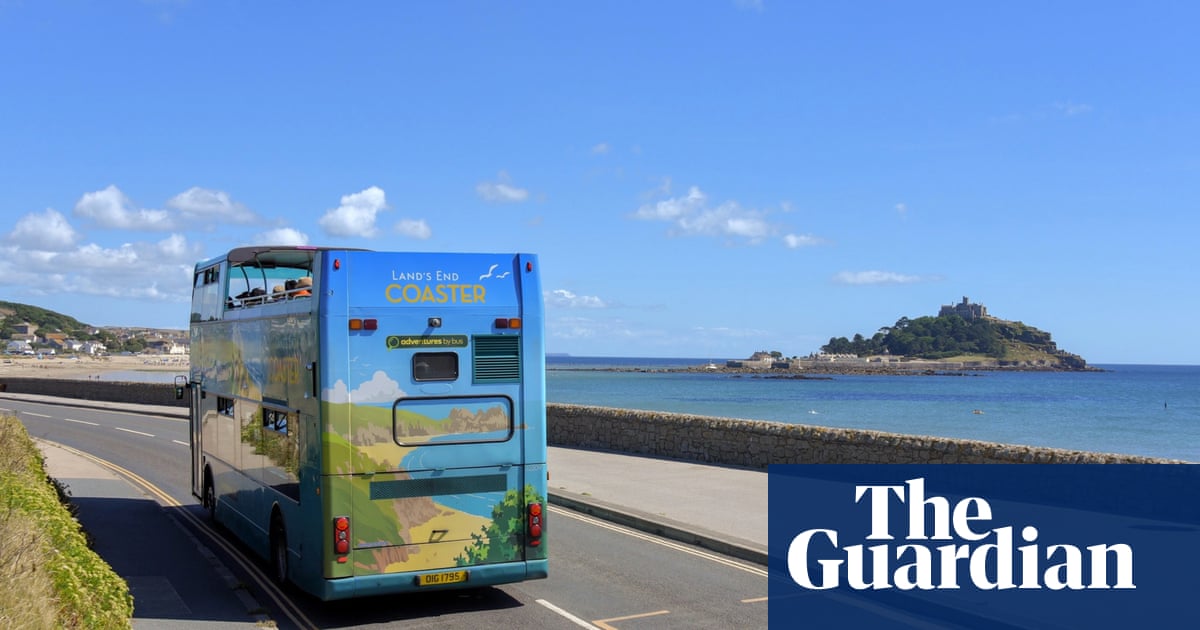
The fields ahead are yellow with daffodils and a soft ocean breeze smells of seaweed and smoked fish. I’m on an open-topped bus above Newlyn harbour near Penzance, where I arrived by train this morning. Through window of that train, I passed a frozen wonderland of icy floods and frosty trees, but west Cornwall feels like another country: lush ferns, palm trees and bright pink camellias flourish in coastal gardens. There are ancient crosses where green lanes meet, and Cornwall’s tallest still-standing stones, the Pipers, cast afternoon shadows like a giant sundial. Just beyond them, there’s a perfect top-deck view of the Merry Maidens stone circle. It may seem counterintuitive to explore by bus in a county known for twisty lanes and summer traffic jams, but it proves reliable and cheap as well ass sustainable.
One of many remarkable things about this spectacular three-hour journey on the Land’s End Coaster, which runs round the tip of Cornwall to St Ives and then cross-country back to Penzance, is that it costs just £2. The bus is part of an ongoing scheme across England, capping many single fares until 31 March. Even when the scheme ends, a day ticket in Cornwall will be just £5 for unlimited travel across the county on buses run by any company. The circular Land’s End Coaster route helps cut down on traffic at honeypot sites and – as a year-round service – it’s useful for local transport. Several people get on and off with shopping bags, and three walkers with dogs climb on board at the saffron-walled Gurnard’s Head Inn. Continue reading...
Sunday, February 5, 2023
Rhodes less travelled: finding peace on the Greek island
Away from the tourist hotspots, this popular Aegean island still has plenty of magic
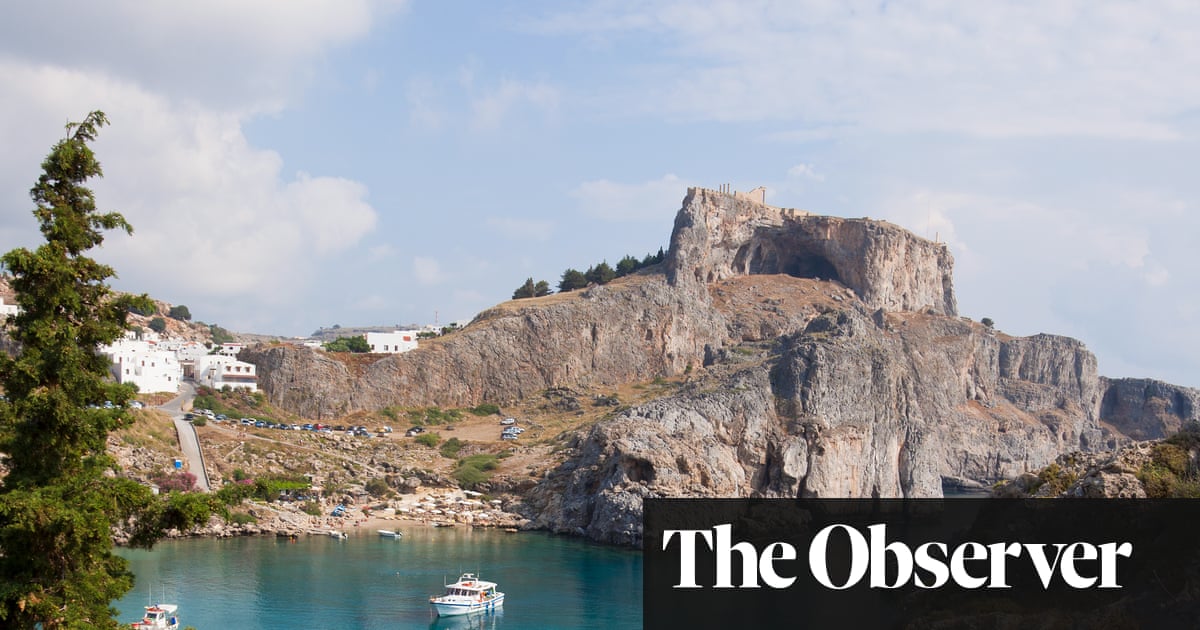
Lunchtime in Apollona, a small village situated in the khaki-tinged hinterland of Rhodes, and all is quiet – save for one terrace set on a small side road above the houses. Here, a mix of locals and visitors sit around wooden tables, on which half-drunk carafes of wine, platters of roasted meats and feta-freckled salads are placed next to bowls of homemade bread. Between the tables, a stout man in an apron bustles around, explaining dishes, telling stories and pouring the wine he sources from friends’ vineyards on the island. This is Giannis, owner and creator of the taverna, Paraga, and a man consumed by a passion for the rich foodie heritage of Rhodes.
Lunch begins with three types of bread and an aubergine dip thick with sesame and yoghurt. Many of Paraga’s recipes have been handed down through the generations. Our main course, a rich beef stifado, has been cooked in clay since the morning, giving Giannis a wonderfully theatrical moment of gently cracking open the ceramic pot to reveal an unctuous stew, served alongside succulent, stock-soaked potatoes. We eat gluttonously, gazing out over the lush green hills, holm oaks and Italian cypress popping up between the silvery-grey olive groves and spindly vineyard lines. Continue reading...
10 of Ireland’s most charming villages
Some of the quirkiest, most picturesque villages are nestled in the outer reaches of the Irish countryside, which has helped preserve their character
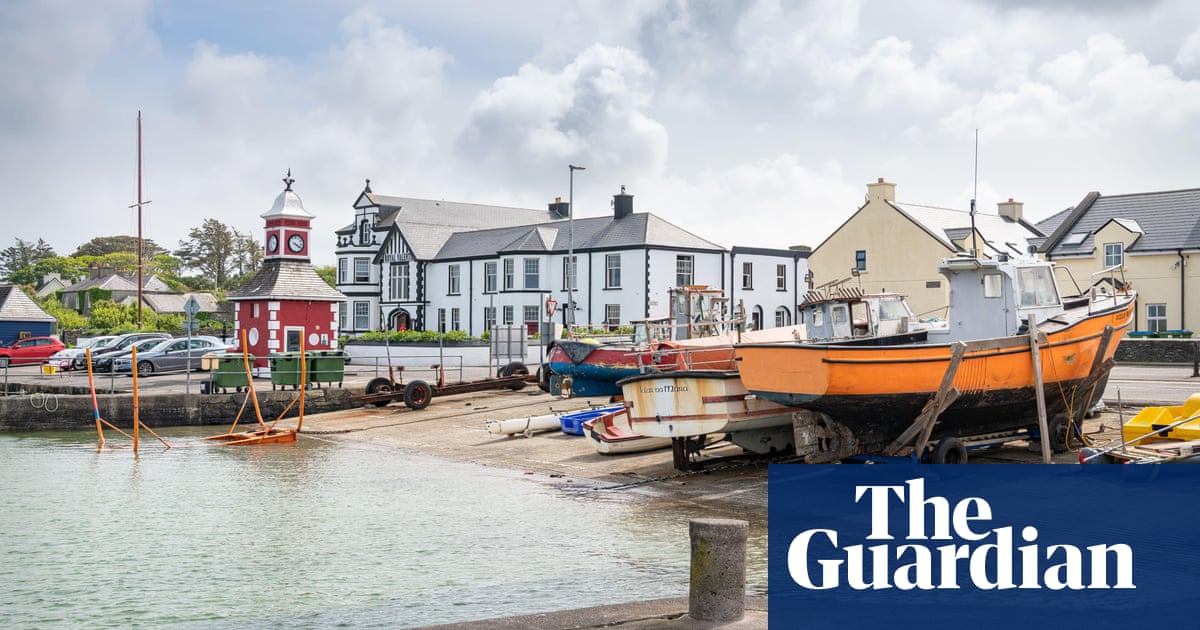
Ireland’s most beautiful and well known villages are easy to love. Even their names – Doolin, Adare, Dingle, Kenmare – roll off the tongue in a smooth syllable or two, as if they are part of a jingle or the end word of a rhyming couplet. Some of them rocketed to fame when they caught the eye of a film crew – such as Cong in The Quiet Man (1952) or Trim in Braveheart (1995), while more places grew in prominence because of their proximity to large cities or popular attractions.
Yet dig a little deeper and you’ll discover some of the most charming in the more remote areas of the Irish countryside, where the past sits more comfortably with the present. Their obscurity – perhaps because of a limited bus service or their narrow country roads – has preserved their wonderfully idiosyncratic character. They might even be more beautiful than their high-profile counterparts yet perhaps less appreciated by tourists, because they are not as accessible. But, for me, that just adds to their allure. Continue reading...
Saturday, February 4, 2023
‘There’s a savage beauty to the place’: the dark mystery of Ireland’s Connemara region
The setting for Kathleen MacMahon’s new novel, The Home Scar, is a haunting expanse of lakes, bogs, heathland and mountains in County Galway
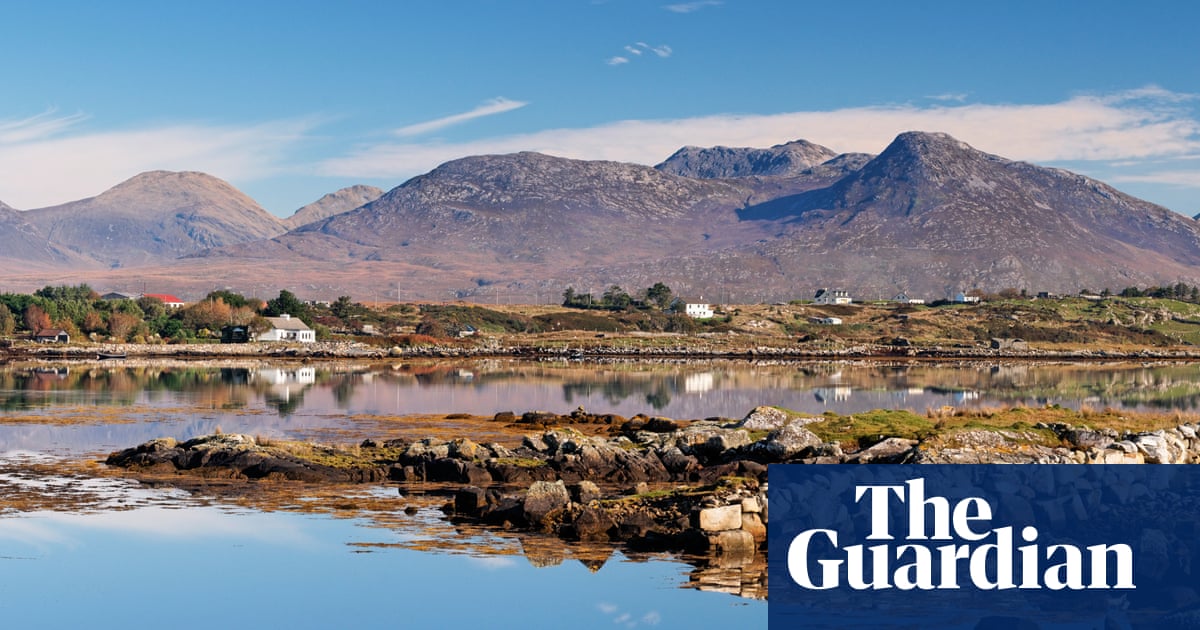
It starts at the top of a mountain. Not the novel itself, but the idea for the novel. The mountain is Errisbeg, on the coast of Connemara in County Galway. It’s an ugly lump of a thing, pocked with prickly yellow gorse and patches of swampy bog, but the landscape it commands is magnificent. The face of the mountain looks directly down on the back-to-back beaches of Dog’s Bay and Gurteen Strand. To the east is the lovely village of Roundstone. The Ballyconeely and Erislannan peninsulas are to the north-west, and beyond them lie the beginnings of the Atlantic, dotted with small islands.
So far, so normal. It’s only when you turn away from the sea and cast your eye inland that things get a little strange. The view travels across an expanse of desolation that stretches as far as the Twelve Bens mountain range in the distance. Not a thing lies between, only bog and scrub and pockets of water and the shadows of clouds travelling over the land. There’s a savage beauty to the place, but there’s also the feeling of something missing. This is a landscape strangely bereft of trees. Continue reading...
Friday, February 3, 2023
‘We’re like an island’: inside Florence’s secret neighbourhood
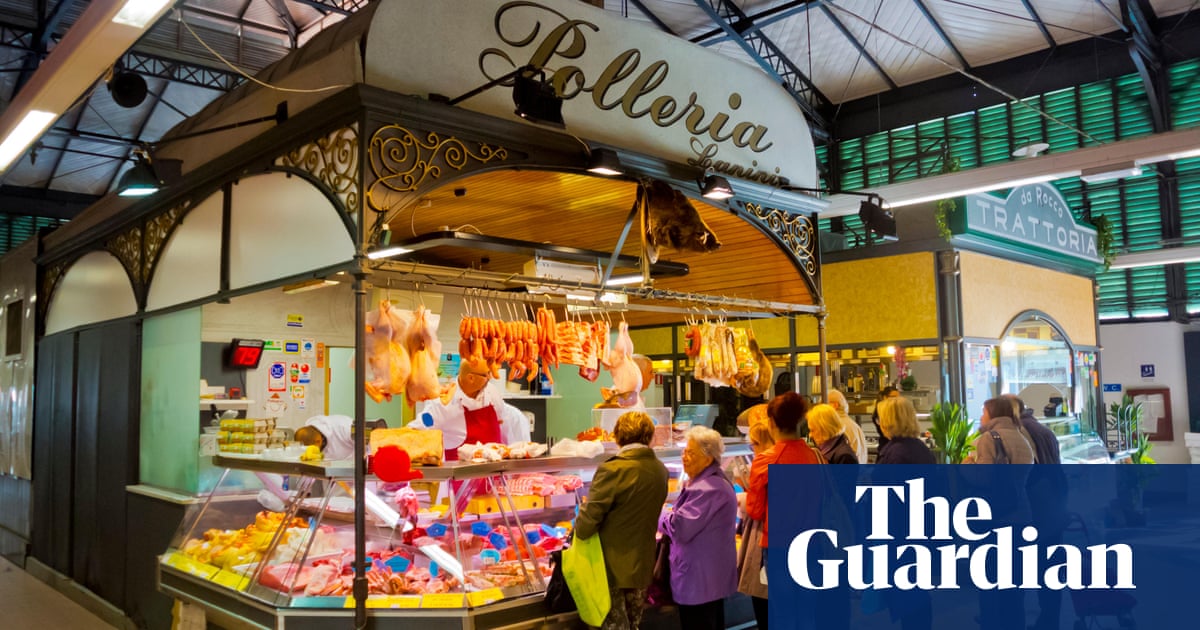
Only minutes from the centre of one of Italy’s most visited cities, the Sant’Ambrogio district has managed to stay under the tourist radar. Locals in market square tell us what makes it so special
The Florentine neighbourhood of Sant’Ambrogio may only be 10 minutes’ walk east from the landmark Duomo and Palazzo Vecchio, but this part of the Tuscan capital has a distinctive character far removed from the tourist pizza traps and overpriced gelato. It’s a tight-knit community that is still genuinely Florentine but also multi-ethnic. It’s a food nirvana and a favourite student haunt.
The crowds thronging the historical centre quickly thin out as I pass into Sant’Ambrogio and the tranquil gardens of Piazza dei Ciompi. It is noon on Friday, and while Giotto’s bell tower may be chiming back in the Piazza del Duomo, the noise that greets me in the piazza is the muezzin’s call to prayer. Crowds of Muslims unroll their prayer mats in the middle of Piazza dei Ciompi, home to the Masjid Al-Taqwa, Florence’s principal mosque. Continue reading...
Thursday, February 2, 2023
Murderous moors: a hike in Yorkshire’s Happy Valley
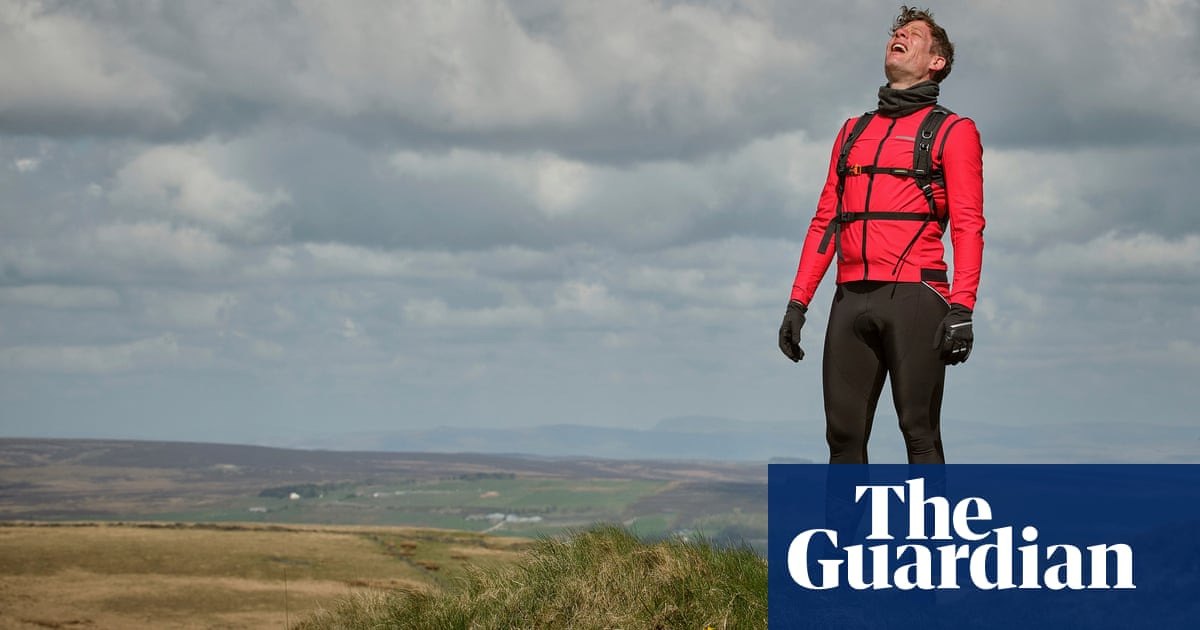
Our writer dons his waterproof trousers for an 11-mile stroll along the towpaths and moortops of Happy Valley country, from Halifax to Todmorden
Come spring, chances are there’ll be driving tours in fake panda cars along the A646 between Halifax and Todmorden, with overnight stays in dodgy-looking farmhouses. Happy Valley has done for Calderdale what Peaky Blinders did for Birmingham, and dark telly tourism is all about ticking off locations and looking the part (though I’m not sure hi-vis tabards will catch on). But there are three better, more active ways to explore the Calder valley. Two of these use the Calderdale Way, either the northern section or the southern, both of which involve hill climbs and traverses across fields, hedgerows, stiles – the usual argy-bargy of agricultural rambling.
The third, easier option is the towpath of the Rochdale canal – and that is what I did, or at least how I began, getting off the train at Sowerby Bridge and heading west. Canals are flat and sometimes circuitous, but they require no navigation skills. You can look around as you amble. As they were built for industry, they take walkers close to the action – people, places, buildings – and there’s plenty to see along this valley. Continue reading...
Wednesday, February 1, 2023
Extreme adventure from Afghanistan to Ecuador: the Banff Mountain Film Festival returns
Shortly to tour the UK, this festival of exhilarating documentaries expands our notions of human possibility – and focuses attention on inequality and the environment
The Banff Mountain film festival opens the door to the inspiring stories of people who simultaneously confront their physical and mental limits and the elements. And with this year’s festival featuring films on a lawyer running ultra marathons to help women in Afghanistan, a mountain-biking family living with disability, and the first woman to kayak down a 30-metre waterfall, there’s more than a hint of activism over environmental and equality concerns.
The festival, which began in 1976, celebrates and showcases the best of mountain culture, sports, and adventure. Over 2023, it will tour the world, with in-person and online screenings taking place in more than 40 countries, including more than 50 cities in the UK and Ireland.
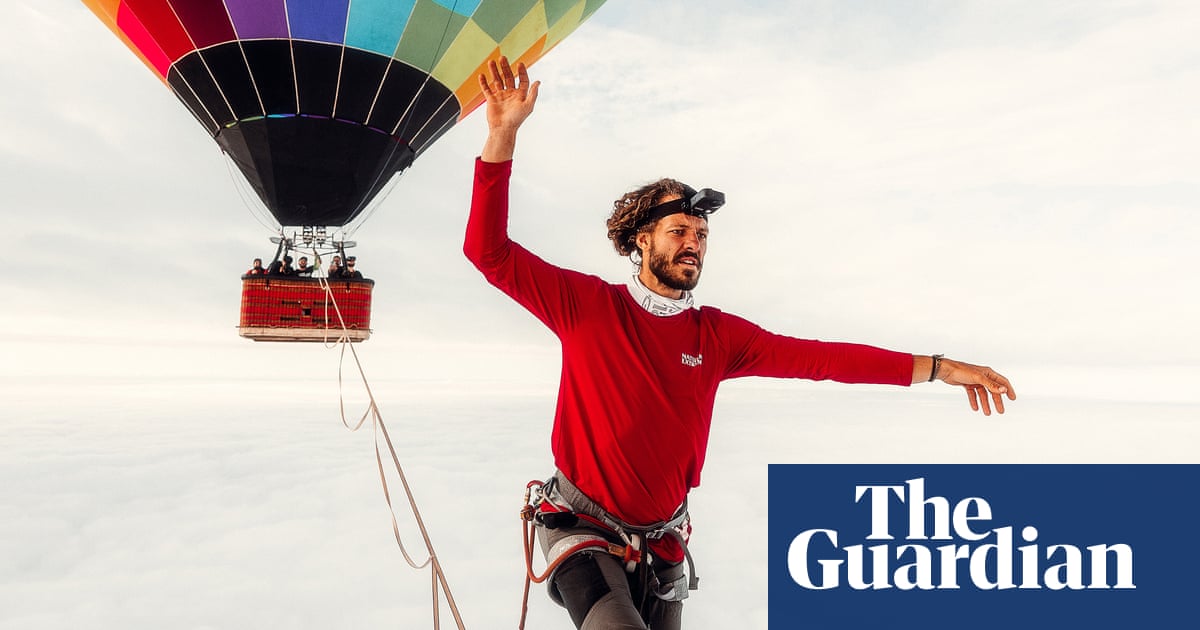
Rafael Bridi in Walking On Clouds Continue reading...
Subscribe to:
Posts (Atom)


